The world of books evens the playing field-- delivering truth, connectedness, and beauty across miles and generations. These are a few of my favorite reads that have inspired, shaped, and motivated me.

Saturday, November 3, 2012

"Mississippi Mud: Southern Justice and the Dixie Mafia" by Edward Humes


Mississippi Mud is a true story revolving around the mysterious murders
of two  prominent Biloxi, Mississippi residents in the late 1980s. The book
painstakingly and dramatically reenacts the goings on in the underbelly
of this Southern Strip of corruption and crime (run by the 'Dixie Mafia')
and the murky interactions of a handful of southern undesirables that led
up to the deaths of husband and wife, Vincent and Margaret Sherry.

Through the eyes of police detectives, con artists, lifers, hired killers, and, most poignantly--the tireless avenger of the Sherrys, their eldest
daughter, Lynne--a storyline is set up that will keep readers rapt. (At
one point, the information presented seemed to indicate rather an
extensive selection of potential suspects.)

Humes beautifully orchestrates the manipulation of timeline and massive
amounts of information. Taken from interviews, transcripts, testimony,
public records, newspaper articles, police reports, news reports, and a good
bit of detective work, the voluminous information is presented in a pot-boiler
manner so that you are unable to predict what will happen next.

And yet there is a comprehensible, easily-absorbed sense as he makes
the torrent of information seem effortless. There is such a rich, vast story
here, painting the humanity of the Sherrys and connecting the readers to
them as if they were our own family...as though we are the ones gnawing
and climbing the walls over the frustrating lack of justice and the far reaches
of the city's corruption.


This is the exhaustive study of how two lives of essentially regular
people can become trivialized by a system filled with corruption,
incompetence, and intimidation. The Southern mafia, perhaps seemingly
a joke at first, becomes a very real and frightening wall of power that,
as anyone who has lived in the south for five minutes can attest, is a
very real and frightening thing.

Kirksey Nix with all his swagger and charm and homilies and smarts
doesn't have anything on Stalin or Mussolini in the sociopath depart-
ment, and he's an all-too common face of the new criminal. The 
devastation of all the harm done by his schemes--from the comfort
of a prison cell--is staggering.

The heroine of the book, Lynne Sposito (daughter of the murder victims) pushes on well past the point most would have dissolved into
tears or fallen to pieces; facing death threats, the concerns for family
safety, stress and grief, and a burden that seemed as though it might
never end...her parents possibly never receiving closure on their lives.


(Note of warning: DON'T look at the photos included in the book
until you've read it! Even though placed in the middle, the captions
accompanying the photos for the central characters gave away
results not found until the end of the book, destroying much of
the suspense!)

Friday, September 28, 2012

Banned Books Week


Do yourself, your mind, your family,
and your community a favor and help
support "Banned Books Week."

Order yourself a banned or challenged
book you've never read, or pass on
a copy of a banned book to a new reader.

Get informed about the extensive history
of censorship and the fight against
intellectual freedom that has gone on
for so long.

Recommend a banned or controversial
book for a book club, or start up
a book club!

Here are a few of my favorite books which have
been censored, banned, or challenged
at one time or another:


Order from your library, local bookseller, or online resource
today and support these great works;
Celebrate your right and ability to read!

Be intellectually free and uninhibited--
don't let anyone tell you what to think,
how to feel, or what your interests 'should' be!


***

Friday, September 21, 2012

"The City and the Pillar" by Gore Vidal


I read the 1965, revised edition, including an afterword and
an essay by Vidal, "Sex and the Law," taken from the 1964
Partisan Review. (The essay is, in itself, worth picking up
the book for; like the novel, it is fascinating, and still highly
relevant as it discloses how religion and 'morality' colors
the law of sex--and why that is inappropriate!)

The novel is of historical significance as it is lauded as the first
fiction book to deal directly and even explicitly with homosexuality
as a matter-of-fact condition, gay relations, and gay sex.

One consistent thought while reading this prose was how aptly
the humanity was portrayed, and how timeless the human experience
is; the book was written by Vidal in 1946 and published in 1948,
yet remains relatable today..


I should point out that the depiction of gay life is not only
'no picnic,' but there is an unsettling and vile edge to much
of the book. The ending in particular is quite unpleasant--
to say the least--and this was the revised edition. The original's
'resolution' was far more damning.

(I don't say this to prevent anyone from reading it; I actually
feel it's a poignant and truthful view of what growing up
as an outsider in one's own body--and own country--does
to us. But it is stark, and not for the feint of heart.)


The story centers on a young man from Virginia who
becomes obsessed about a relationship with a childhood friend
in the 1930s/1940s. As the primary youngster (Jim Willard)
leaves home and begins to live his life and explore his
feelings, his path alters from expectation...but the idealistic
notion of reuniting with his first love is never far from mind.


Throughout the course of several years and several
dissatisfying relationships, Jim grows up and becomes
fairly hardened by the nature of 'the gay life.' (However,
as in real life, he is hyper-critical of others while always failing
to see his culpability in these matters! I imagine there's quite
a bit of Vidal's hubris inherent there.)

I don't want to give away the plot turns, so I'll say no
more as to the details. But this is a rich, provocative,
simply--yet elegantly--written work that captures
your attention and keeps you attuned to the developments
in this troubled young man's life, and the lives of those
whose path he crosses.

***

Thursday, August 9, 2012

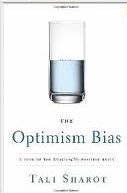
"The Optimism Bias: A Tour of the Irrationally Positive Brain" by Tali Sharot


"The Optimism Bias: A Tour of the Irrationally Positive Brain"

Tali Sharot is a neuroscientist grad from New York University
who for years has studied the effect on neural biology and
emotional landscapes and how other factors influence
and determine people's sense of optimism and hopefulness
(or lack thereof.)

This book deals with the scientific through studies, surveys,
animal research, and other methods including analogy and case
studies, but never becomes tedious. The way she develops
her theories and layers her insights is interesting, and the facts
and findings are of use to anyone who has dealt with
negativity, hopelessness, depression, or passiveness.


Some of the findings might seem banal (as well as obvious) on the
surface, but then the way the information is applied and connected to other
findings is what stands out. For example, one section tells how those with
privilege have hope and optimism, more so than those without, and how
those without comforts have a realistic view of the world. But despite
the insightfulness of a realistic view, is it preferable?

This is more than sociology and psychology; this is delving into the
workings of the brain, and how it is designed to safeguard us from being
whelmed by our human ability to anticipate and expect and plan.
What happens when the understood threat of death, disease, frailty, loss, and
more become too loud in our heads, no longer distracted by the brain's
fail safe of hope and optimism?

Depression.


Sharot delineates one of the most masterful explanations of how
depression develops and how it can be combated that I have
read in the last 25 years.

One area of particular note; Expectations. A person's
expectations weigh heavily on outcomes--their own and other
people's. Expectation of a positive result breeds more positive
mood, despite the actual eventual result. Thus who are falsely positive
benefit from reduced anxieties, depressive moods, worry, and other
problems that assault someone who tends to picture the worst
case scenarios--no matter that it may be more likely!

If you've ever wondered why your mindset of worry can't
seem to be changed, or just how and why  'Ignorance is bliss,'
check out this fascinating read.

Tuesday, July 3, 2012

"Going Solo" by Eric Klinenberg

"Going Solo: The Extraordinary Rise and Surprising Appeal
of Living Alone" is a tremendously interesting and
(perhaps more importantly) helpful read.
Eric Klinenberg uses statistics and the history of
Singletons (people living on their own, as he coins it)
in such an insightful and fascinating way that you never
feel as though you're reading a non-fiction book.

Because it's not a matter of dry textual analysis, but
rather an exploration of the sociology behind living solo,
and it's populated by tales of people in all manner of situations
throughout the past 100 years, delving into minds and
emotions and social trends.

It showed me a whole new aspect of our modern lifestyle
as well as the development of this country over time.
What it also did, though, was make me feel better
about my choice to live single, and solo.

Klinenberg is very adept at walking a middle-ground
with his presentation;
very fair-minded and even-handed with his findings,
even though he does obviously hold his own perspective.

The reasons for the trend in people deciding to live alone is
respectfully handled, and the advocacy for more
understanding of the lifestyle is promoted. By penetrating
the veil of society's (somewhat weakening) antagonism
against people who don't marry/start families/have
roommates (it's still alive and well in many areas,
including the Bible-swamped South where I live,)
there is a new sense of acceptance and tolerance
that has been lacking.

This is definitely a reality of our world that has
not seen adequate coverage in media.
(From a non-biased POV, at least!)


Pretty much all aspects of the phenomenon are covered--
from the elderly to post-divorce singles to
the new trend for all kids in a family having their own rooms.

The way this book helped me was to show me that invisible pocket
of humanity that lives and believes and works the same
way as I do. Sometimes the idea of being the only person
on the planet that feels or lives a certain way can be stifling.

There is a definite sense of camaraderie in feeling
'together in our aloneness!'


***